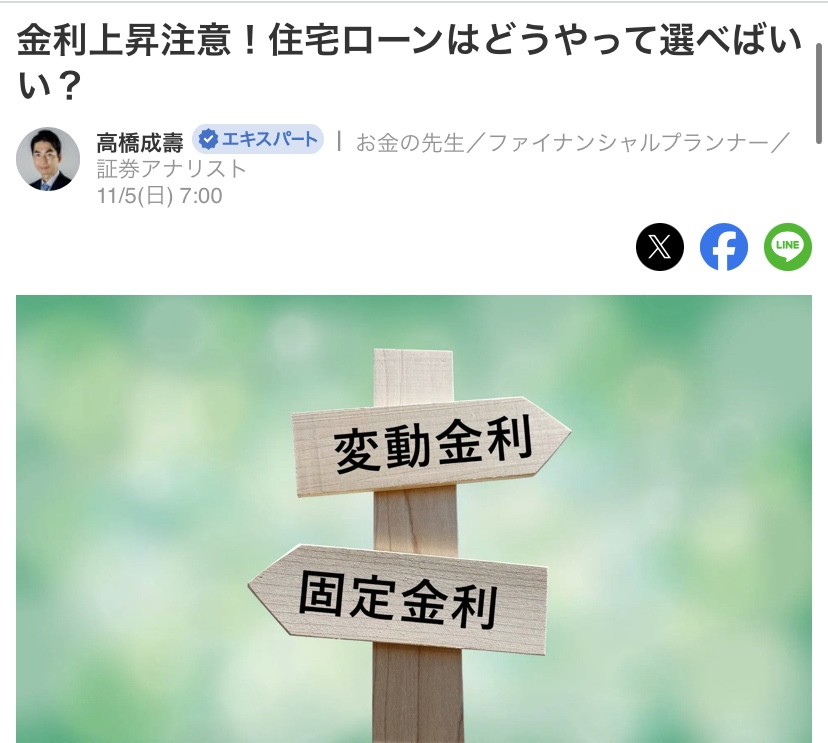
Across regional Japan and suburban areas, local governments face a critical infrastructure challenge: hundreds of thousands of public housing units and commercial properties built during the 1960s and 1970s have reached the end of their operational lifespans. Due to declining populations and tight municipal budgets, cities can no longer afford to rebuild these large facilities using public funds alone.
To solve this problem, Japanese municipalities are actively introducing Public-Private Partnerships (PPP) and Private Finance Initiatives (PFI). Instead of financing direct reconstruction, cities are downsizing public housing portfolios, selling surplus land to private developers, and leasing facilities from private operators.
As reported by The Nikkei on October 7, 2026, public-private initiatives to rebuild aging public housing are expanding across Kansai, driving local land values up by as much as 30%. For foreign investors, SMEs, and family offices looking beyond central Tokyo, these projects present a proven model that pairs reliable returns with meaningful regional impact.
Contents
- 1 Key Takeaways for Real Estate Investors
- 2 Case Study 1: Daito City “morineki” – The Low-Rise Wooden Master Lease Model
- 3 Case Study 2: Hyogo Prefectural Ogi Housing – Vertical Consolidation and Land Monetization
- 4 Case Study 3: Minoh Station Building – Condominium Site Sales and 70-Year Ground Lease
- 5 Comparing the Three Redevelopment Frameworks
- 6 Considerations for Foreign Investors and SMEs
- 7 How We Can Support Your Real Estate Initiatives in Japan
Key Takeaways for Real Estate Investors
- Downsizing Public Housing Portfolios: Japan has roughly 2.1 million public housing units. Instead of rebuilding all units with public tax money, municipalities are cutting housing stock, using long-term master leases, and transferring project delivery to private consortia.
- Three Tested Models in Kansai: Recent projects highlighted by The Nikkei demonstrate three distinct frameworks: (1) low-rise wooden buildings supported by a 20-year municipal master lease in Daito City, (2) vertical consolidation freeing surplus land for private condo development in Kobe City, and (3) station-front redevelopment using the Condominium Site Sales Scheme and 70-year fixed-term ground leases in Minoh City.
- Controlled Land Costs and Guaranteed Inflows: Utilizing fixed-term ground leases and government-backed master leases enables private developers to avoid high land acquisition costs while securing reliable occupancy.
Case Study 1: Daito City “morineki” – The Low-Rise Wooden Master Lease Model
Location: Daito City, Osaka Prefecture (5-minute walk from Shijonawate Station on the JR Gakkentoshi Line)
According to The Nikkei, the “morineki” project transformed an aging municipal estate of 144 units built between fiscal 1965 and 1972. The estate suffered from low occupancy and surrounding vacancies, and the city’s initial plan for a direct municipal rebuild stalled due to financial constraints.
Background & Execution
In 2016, Daito City provided equity to establish a local town management company named Komin. A Special Purpose Company (SPC) under Komin consolidated and downsized the old estate into 74 two-story wooden housing units integrated with a public park, bakery, restaurant, and retail shops. The project officially opened in 2021.
Financial and Investment Mechanics
- Fiscal Cost Reduction: According to a 30-year financial simulation cited by The Nikkei, this model reduced the city’s expenditure by more than 700 million yen compared to constructing a municipal facility directly.
- 20-Year Municipal Master Lease: Daito City leases the 74 units from the SPC for up to 20 years to run them as municipal housing. For the asset owner, this provides 20 years of stable rental revenue backed by the local government.
- Full Private Market Transition: After the 20-year lease term ends, all 74 units will transition into standard private rental housing. As Tomoko Irie, head of Komin, stated to The Nikkei, the project aims to “gradually phase out public housing while cultivating the local neighborhood.”
- Rising Neighborhood Land Values: The new community amenities attracted young families. According to The Nikkei, standard road land values (rosenka) around the project site increased by 20% to 30%.
Case Study 2: Hyogo Prefectural Ogi Housing – Vertical Consolidation and Land Monetization
Location: Higashinada Ward, Kobe City, Hyogo Prefecture (Between Fukae Station and Ogi Station on the Hanshin Electric Railway)
According to The Nikkei, the Hyogo Prefectural Government introduced a Private Finance Initiative (PFI) scheme for the first time to rebuild the Ogi Prefectural Housing complex, where seven buildings with 314 units were over 40 years old.
Background & Execution
A joint venture (JV) led by Karatani Construction (Amagasaki City) was selected as the project contractor. The project replaces the seven separate buildings with a single 11-story building containing 285 units.
Financial and Investment Mechanics
- Vertical Consolidation and Land Sales: Consolidating the units into one high-rise building freed up a large surplus plot within the property. Hyogo Prefecture expects approximately 2.1 billion yen in revenue by selling this surplus land to the JV.
- Private Condominium Development: On the acquired surplus land, the private JV is building 288 condominiums tailored to young and child-rearing families, along with a community learning space and a cafe on the first floor.
- Timeline Reduction: According to the Hyogo Prefectural Public Housing Division cited in the report, delegating the project to the private consortium reduces the total execution period from approximately 11 years down to roughly 6 years, significantly lowering capital holding costs.
Case Study 3: Minoh Station Building – Condominium Site Sales and 70-Year Ground Lease
Location: Minoh City, Osaka Prefecture (Front of Hankyu Minoh Station)
According to The Nikkei, the redevelopment of the former “Minoh Sun Plaza No. 1” illustrates how private developers can unlock complex multi-owner properties. Built in 1979, the original building was found to lack sufficient earthquake resistance in 2015. Rebuilding negotiations initially stalled because multiple unit owners held conflicting opinions.
Background & Execution
Tokyo Tatemono and Hankyu Hanshin Properties joined the project as private development partners. They introduced the “Condominium Site Sales Scheme” under the Act on Facilitation of Reconstruction of Condominiums—marking the first application of this legal framework in the Kansai region.
Financial and Investment Mechanics
- Resolving Ownership Deadlocks: Under this statutory framework, an 80% (four-fifths) supermajority vote allows the entire building and land to be sold to an accredited private developer, providing unit owners with a direct cash exit.
- 70-Year General Fixed-Term Ground Lease (Teiki Shakuchiken): Minoh City kept freehold ownership of the underlying land and granted a 70-year fixed-term lease to the developers. The developers constructed an 11-story complex with 109 residential units without incurring prime land acquisition expenses.
- Reversion to the Municipality: According to the city, the building will be demolished and the cleared land will be returned to Minoh City after 70 years, preserving future station-front development options for the next generation.
- Public-Private Space Split: Minoh City acquired floors 1 through 3 to operate a childcare center, meeting rooms, and commercial shops, while floors 4 through 11 were sold as private residential units.
Comparing the Three Redevelopment Frameworks
1. Daito City Model (Master Lease + Wooden Low-Rise)
- Asset Composition: Public housing, retail shops, and public park
- Key Advantage: Low construction costs; 20-year municipal rental income backing
- Exit Strategy: Converts to 100% private market rental housing after lease period
2. Kobe City Model (PFI + Surplus Land Sale)
- Asset Composition: Public housing tower combined with private condominium development
- Key Advantage: Direct access to rare, large development plots near public transit
- Exit Strategy: Sales proceeds from private market condominium units
3. Minoh City Model (Site Sales Scheme + 70-Year Ground Lease)
- Asset Composition: Station-front municipal community floors with private condos above
- Key Advantage: Zero upfront land purchase expense; clean resolution of multi-owner titles
- Exit Strategy: Condominium unit sales; land returns cleanly to the city after 70 years
Considerations for Foreign Investors and SMEs
Entering municipal redevelopment projects in Japan requires an operational strategy distinct from standard condo acquisitions in Tokyo or Osaka:
- Target Mid-Scale Opportunities: Major Japanese construction conglomerates focus on multi-billion-yen urban megaprojects. Smaller suburban parcels (50 to 150 units), closed school buildings, and regional station-front assets provide space where smaller syndicates and private SMEs can participate.
- Form Local Consortia: Bidding for municipal projects requires meeting specific public procurement criteria. Partnering with regional licensed builders, local architects, and regional banks (chigin or shinkin) is essential to pass pre-qualification reviews.
- Plan for Long-Term Value: PPP and PFI models involve formal municipal approvals, structured bidding, and community coordination. These investments are designed to generate stable long-term cash flow and capital appreciation, rather than short-term flips.
How We Can Support Your Real Estate Initiatives in Japan
Navigating Japanese municipal regulations, the Condominium Reconstruction Facilitation Act, and local PPP/PFI bidding rules requires licensed local guidance.
Our team provides comprehensive bilingual advisory services for international investors, corporate entities, and family offices:
- Sourcing underutilized public properties and regional PPP/PFI project opportunities
- Structuring joint venture consortia with licensed Japanese contractors and financial partners
- Analyzing fixed-term ground lease (Teiki Shakuchiken) agreements and long-term project yields
- Coordinating complete technical due diligence, building inspections, and official transaction documentation
Interested in exploring structured public-private property investments in Japan?
Contact our advisory desk through our inquiry form to schedule a preliminary discussion.